
Introduction
In an increasingly digital world, printed marketing materials continue to play a crucial role in business communication. Brochures and catalogues remain among the most effective tools for presenting products, highlighting services, and building brand credibility. Whether used at trade shows, corporate meetings, retail outlets, or direct marketing campaigns, professionally printed materials create a lasting impression that digital advertisements often cannot replicate.
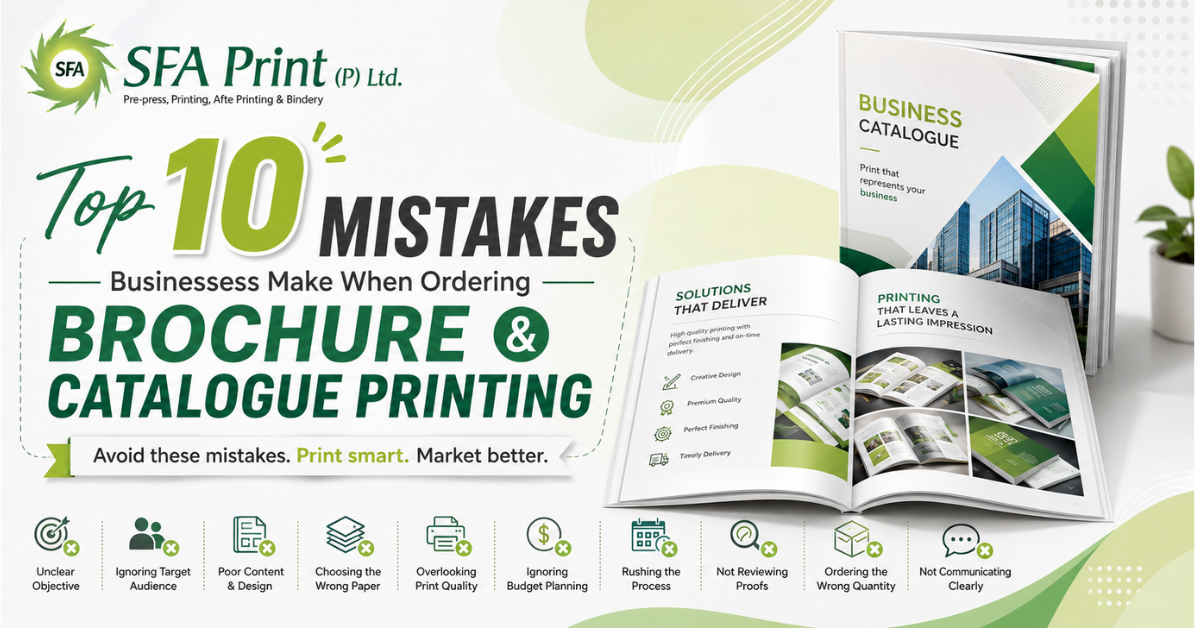
This is where professional Business Printing Solutions become essential. In this guide, we explore the ten most common mistakes businesses make when ordering brochures and catalogues and provide practical recommendations to help you achieve outstanding print outcomes.
Why Brochures and Catalogues Continue to Be Valuable Marketing Tools
Despite the growth of digital marketing, brochures and catalogues continue to deliver significant value across industries.
A professionally printed brochure provides customers with tangible information they can read, share, and retain. Catalogues offer a structured way to showcase extensive product ranges while reinforcing brand identity. Businesses frequently use these materials during exhibitions, sales presentations, product launches, retail promotions, and customer engagement campaigns.
Unlike digital advertisements that can be easily ignored or forgotten, printed materials create a physical connection with potential customers. This makes investing in reliable Business Printing Solutions an important part of a company’s overall marketing strategy.
Top 10 Brochure Printing Mistakes Businesses Should Avoid
1. Submitting Low-Resolution Artwork
One of the most common printing mistakes is providing artwork that is not suitable for professional printing.
Images downloaded from websites or social media platforms often have low resolution and may appear acceptable on a screen. However, when enlarged and printed, these images can appear blurry, pixelated, or distorted.
Best Practice
- Use images with a minimum resolution of 300 DPI.
- Supply vector graphics whenever possible.
- Ensure logos and branding elements are available in high-resolution formats.
- Request artwork verification before production begins.
Professional Brochure Printing Services typically review artwork files to identify potential quality issues before printing.
2. Ignoring Bleed, Margins, and Safe Zones
Many businesses underestimate the importance of technical print specifications. Bleed areas allow printers to trim materials accurately without leaving unwanted white edges. Similarly, maintaining proper margins ensures that critical text and images are not accidentally cut during finishing.
Common Consequences
- Cropped text
- Misaligned graphics
- Uneven borders
- Unprofessional appearance
Best Practice
Design files should include:
- Standard bleed settings
- Safe zones for important content
- Proper trim marks
3. Prioritizing Visual Design Over Readability
Creative design is important, butFollowing these guidelines significantly improves the final presentation of marketing materials. excessive visual elements can reduce readability and customer engagement.
Some businesses focus heavily on graphics while overlooking content hierarchy, typography, and user experience. As a result, readers may struggle to understand the message or find important information.
Best Practice
Successful brochures combine attractive design with clear communication. Consider:
- Readable font sizes
- Logical content structure
- Effective use of white space
- Clear calls to action
Modern Custom Printing Solutions allow businesses to balance creativity and functionality while maintaining strong brand consistency.
4. Choosing the Wrong Paper Stock
Paper selection has a significant impact on the overall effectiveness of brochures and catalogues. Many organizations choose paper solely based on cost without considering how it influences durability, appearance, and customer perception.
Factors to Consider
- Paper thickness (GSM)
- Matte or gloss finish
- Durability requirements
- Brand positioning
For luxury brands, premium materials often reinforce credibility and professionalism. Businesses seeking Premium Brochure Printing should carefully evaluate paper options that complement their marketing objectives.
Best Practice
Consult with print specialists to identify the most suitable paper stock for your project rather than selecting materials based solely on budget.
5. Failing to Define the Purpose of the Printed Material
Not all brochures serve the same purpose. Some businesses create brochures without clearly defining their objectives, target audience, or intended use. This often leads to ineffective messaging and poor marketing results.
Questions to Ask Before Printing
- Is the brochure intended for lead generation?
- Will it be distributed at exhibitions?
- Is it designed for retail customers?
- Does it support sales presentations?
Understanding the purpose helps guide design, content, format, and production decisions. Experienced providers of Brochure Printing Services often assist businesses in selecting the most appropriate format based on their marketing goals.
6. Selecting the Wrong Printing Method
Choosing the wrong printing technology can increase costs and reduce quality. Many businesses fail to understand the differences between digital and offset printing.
Digital Printing
Suitable for:
- Small print runs
- Faster turnaround times
- Variable data printing
Offset Printing
Suitable for:
- Large-volume orders
- Consistent color reproduction
- Lower per-unit costs at scale
An experienced Offset Printing Company India can help determine the most cost-effective production method based on quantity, budget, and quality expectations.
Best Practice
Discuss project specifications with your printer before finalizing production requirements.
7. Ordering Incorrect Quantities
Quantity planning is often overlooked during brochure and catalogue production. Ordering too few copies can lead to costly reprints, while ordering excessive quantities may result in storage issues and wasted inventory.
Risks of Under-Ordering
- Higher reprint costs
- Missed marketing opportunities
- Event shortages
Risks of Over-Ordering
- Excess storage expenses
- Outdated materials
- Unnecessary budget allocation
Businesses considering Bulk Brochure Printing should forecast future usage accurately and align quantities with campaign requirements.
Best Practice
Analyze historical demand, event schedules, and sales forecasts before placing large orders.
8. Skipping Color Proofing and Print Samples
Color inconsistencies are among the most frequent complaints in commercial printing. A design that appears vibrant on a computer monitor may look different when printed due to variations between RGB and CMYK color models.
Common Issues
- Incorrect brand colors
- Darker-than-expected images
- Inconsistent visual appearance
Best Practice
Always request:
- Physical proofs
- Color samples
- Pre-production approvals
Businesses seeking High-Quality Printing Services understand the importance of validating colors before full-scale production begins. Proper proofing helps prevent costly reprints and protects brand consistency.
9. Ignoring Finishing and Binding Options
Finishing touches significantly influence how customers perceive printed materials. Unfortunately, many businesses treat finishing as an afterthought.
Popular Finishing Options
- Gloss lamination
- Matte lamination
- Spot UV coating
- Embossing
- Foil stamping
- Perfect binding
- Saddle stitching
Advanced Custom Printing Solutions allow businesses to create visually striking marketing materials that stand out from competitors.
Similarly, Premium Brochure Printing often incorporates specialized finishes to enhance durability and visual appeal.
Best Practice
Select finishing options that align with your brand identity and intended audience rather than choosing generic solutions.
10. Choosing the Lowest-Cost Printer Instead of the Most Qualified Partner
Price is important, but selecting a printing provider solely based on cost can lead to long-term problems. Inexperienced printers may lack:
- Quality control systems
- Advanced equipment
- Color management expertise
- Production scalability
- Reliable delivery processes
The result can be inconsistent output, missed deadlines, and additional expenses.
Investing in professional Business Printing Solutions often delivers better value through superior quality, reduced waste, and dependable service.
Best Practice
Evaluate printers based on:
- Industry experience
- Production capabilities
- Customer support
- Quality assurance processes
- Delivery performance
An established Offset Printing Company India can provide greater confidence for large-scale commercial printing projects.
Pre-Print Checklist Should Follow
Before sending your brochure or catalogue for printing, carefully review this essential checklist to ensure accuracy, quality, and smooth production.
i) Content Review
- Final content approved
- Contact details verified
- Product information updated
ii) Artwork Verification
- High-resolution images included
- Logos supplied in correct format
- Fonts embedded correctly
- Bleed and margins checked
iii) Production Planning
- Paper stock selected
- Finishing options confirmed
- Quantity finalized
- Delivery schedule approved
iv) Quality Control
- Proof reviewed
- Color consistency verified
- Final approval documented
By reviewing this checklist before placing a print order, businesses can minimize production mistakes, maintain consistent quality standards, prevent unnecessary expenses, improve project efficiency, and maximize the return on their investment in professional Business Printing Solutions for brochures, catalogues, and marketing materials.
SFA Print: Delivering Precision, Quality, and Reliability
At SFA Print, we understand that successful brochure and catalogue printing goes beyond attractive designs. It requires precision, technical expertise, quality control, and a commitment to delivering marketing materials that reflect your brand professionally. With extensive experience in commercial printing, we support businesses at every stage of the printing process through:
- Expert consultation and project planning
- Print-ready artwork review and support
- Customized paper and material recommendations
- Accurate color reproduction and quality checks
- Advanced offset and commercial printing capabilities
- Consistent print quality across every order
- Timely production and dependable delivery schedules
Organizations seeking High-Quality Printing Services rely on SFA Print for dependable printing solutions tailored to their business objectives. Our team combines industry knowledge, modern printing technology, and meticulous attention to detail to ensure every project meets the highest standards.
For businesses planning Bulk Brochure Printing, SFA Print offers scalable production capabilities, competitive pricing, consistent output quality, and streamlined workflows that help maximize efficiency without compromising on quality.
Our commitment is to provide reliable printing solutions that support your marketing success and strengthen your brand presence in every printed piece.
Final Words
Achieving successful results requires careful planning, proper artwork preparation, suitable material selection, accurate proofing, and expert production management. Avoiding these ten common mistakes can significantly improve print quality, reduce unnecessary costs, and enhance marketing performance.
More importantly, partnering with an experienced commercial printer ensures access to reliable Business Printing Solutions that deliver consistent results across every project.
Print Smarter with SFA Print
From brochures to catalogues, SFA Print delivers high-quality, cost-effective printing solutions tailored to your business needs.
Frequently Asked Questions(FAQs)
- What is the best paper for brochure printing?
The ideal paper depends on your brand image, budget, and intended use. Glossy and matte finishes are popular choices.
- How can I ensure high-quality brochure printing?
Use high-resolution artwork, proofread content carefully, and work with an experienced printing company.
- What is the difference between digital and offset printing?
Digital printing suits small quantities, while offset printing is cost-effective for large-volume orders.
- Why is print proofing important before production?
Proofing helps identify design, content, and color issues before final printing, reducing costly errors.
- How far in advance should I place a brochure printing order?
It is advisable to plan and place orders early to allow sufficient time for proofing, printing, and delivery.